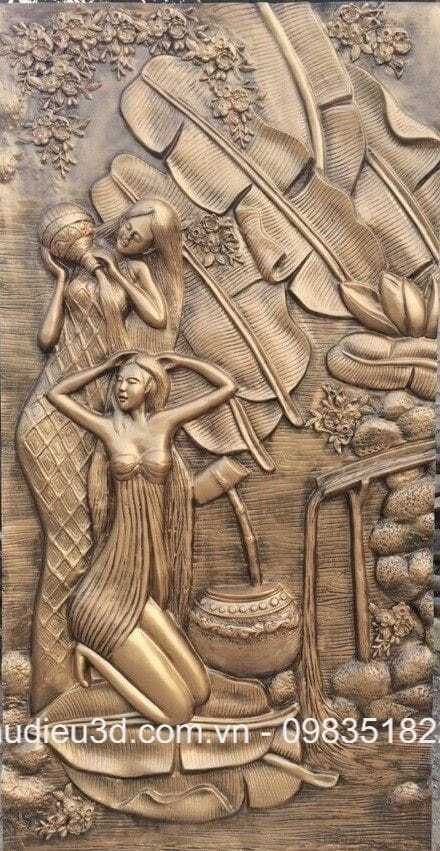
3D relief, also known as relief sculpture, is a technique where sculpted elements are raised above a background surface, creating a three-dimensional effect while remaining attached to the background. 3डी रिलीफ, जिसे रिलीफ मूर्तिकला के रूप में भी जाना जाता है, एक ऐसी तकनीक है जिसमें गढ़े गए तत्वों को पृष्ठभूमि की सतह से ऊपर उठाया जाता है, जिससे पृष्ठभूमि से जुड़े रहते हुए त्रि-आयामी प्रभाव पैदा होता है।
Here's a more detailed explanation:
What is 3D Relief?
Definition:
3D relief is a type of sculpture where the figures or forms are raised from a flat background, giving the impression of depth and three-dimensionality.
Types:
Low Relief (Bas-Relief):Figures are only slightly raised above the background.
High Relief:Figures are more deeply carved, with elements protruding more significantly from the background.
Applications:
Architectural Projects:Reliefs are often used in architectural settings, such as on walls, ceilings, and floors.
Digital Art:Digital reliefs can mimic the style of real-life counterparts, offering an elegant depiction of a 3D shape.
3D Maps and Models:Raised-relief maps and terrain models are physical representations of terrain, often used for educational or navigational purposes.
Materials:
Reliefs can be carved or molded from various materials, including stone, clay, wood, metal, and plaster.
Digital Relief Generation:
Digital bas-relief can be generated from 3D scenes, allowing for the creation of relief art from digital models.
Examples of 3D Relief:
Classical Relief Sculpture:Ancient Greek and Roman art featured intricate relief carvings on walls and buildings.
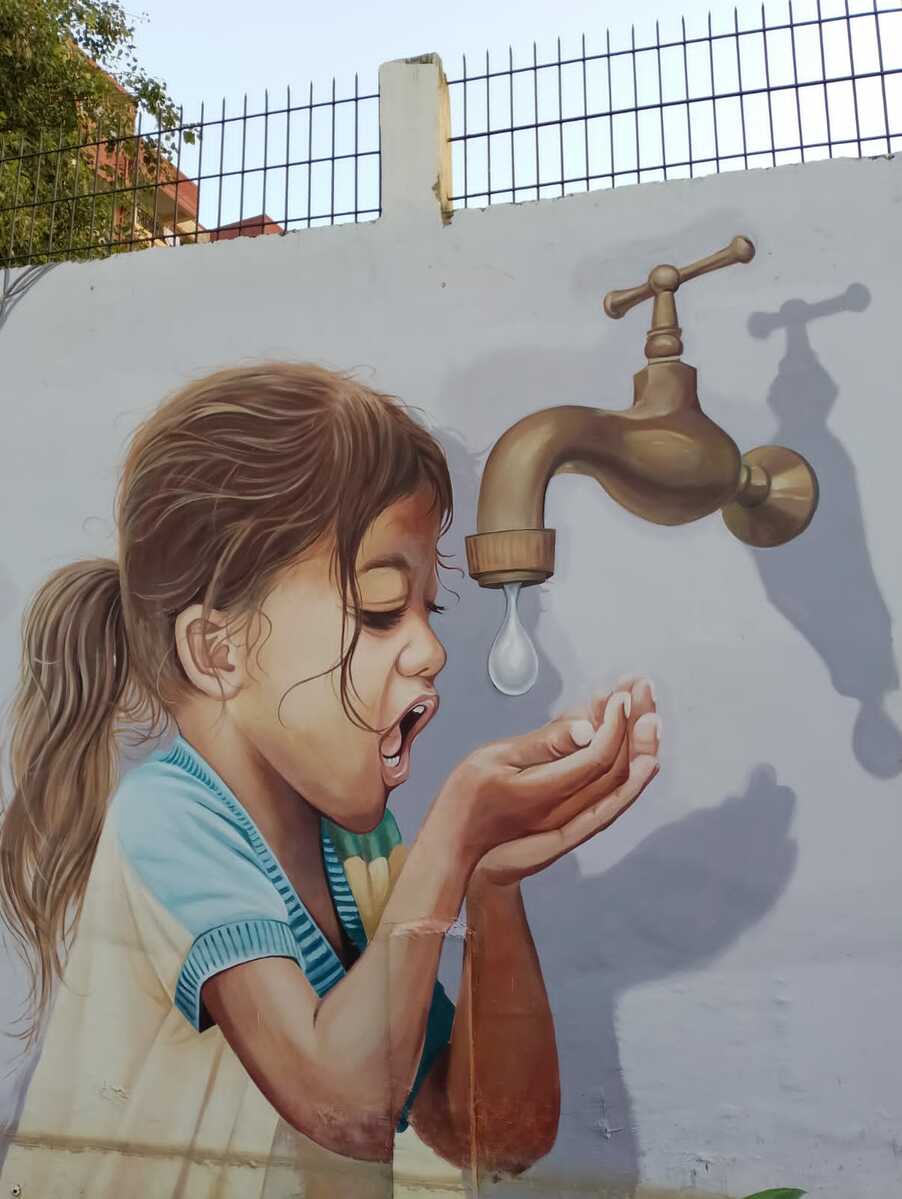
Wall painting, also known as mural art, involves applying artwork directly onto a wall or ceiling, often as an integral part of architectural decoration, with techniques ranging from traditional fresco to modern spray painting. दीवार चित्रकला, जिसे भित्ति कला के रूप में भी जाना जाता है, में दीवार या छत पर सीधे कलाकृति लगाना शामिल है, जो अक्सर वास्तुशिल्प सजावट का एक अभिन्न अंग होता है, जिसमें पारंपरिक फ्रेस्को से लेकर आधुनिक स्प्रे पेंटिंग तक की तकनीकें शामिल होती हैं।
Here's a more detailed look at wall painting:
History and Evolution:
Ancient Origins:
Wall painting has roots in prehistoric cave paintings and rock art, evolving into elaborate decorations on tombs, temples, and other buildings.
Muralista Movement:
The term "mural" gained popularity after the Mexican Muralista Art Movement.
Indian Examples:
Ajanta-Ellora caves, caves from the Kaimur range, parts of Uttar Pradesh, and the rock shelters of Bhimbetka in Madhya Pradesh are examples of early wall paintings in India.
Techniques and Materials:
Fresco:
A well-known technique involving painting on wet plaster with water-soluble pigments.
Fresco Secco:
Natural colors and pigments are applied to dry plaster using natural binders like lime.
Other Techniques:
Wall paintings can be executed using various techniques, including encaustic, tempera, oil paint on canvas, and stenciling.
Materials:
Traditional materials include plaster, stone, and timber, while modern techniques may involve canvas and other materials.
Indian Wall Painting Colors:
Indian wall paintings often feature colors like red ochre, vermilion, yellow ochre, indigo blue, lapis lazuli, lamp black, chalk white, terraverte, and green.
Purposes and Functions:
Decoration and Art:
Wall paintings serve as a form of artistic expression and architectural decoration, enhancing spaces and conveying cultural messages.
Public Art:
Murals bring art into public spaces, offering artists recognition and allowing for social and political commentary.
Interior Design:
Wall paintings can be used to create unique and personalized interior spaces, with options like abstract, spiritual, and landscape themes.
Traditional Art Forms:
Warli painting, an ancient Indian art form, is an example of a traditional mural painting style.
Conservation and Challenges:
Vulnerability:
Wall paintings are susceptible to deterioration due to their thin layer at the interface between the wall and the environment.
Conservation Challenges:
Conservation can be complex, requiring a holistic approach that considers the painting's relationship with its environment.
Threats:
Wall paintings face threats from urbanization, development, and lack of protection, leading to deterioration and potential loss.
Oil painting is a painting method where pigments are mixed with a drying oil, like linseed oil, as a binder, and applied to a surface like canvas or wood, known for its rich colors, flexibility, and ability to create layers and textures. तेल चित्रकला एक ऐसी चित्रकला पद्धति है जिसमें रंगद्रव्य को सुखाने वाले तेल, जैसे अलसी के तेल, के साथ एक बांधने वाले पदार्थ के रूप में मिलाया जाता है, और कैनवास या लकड़ी जैसी सतह पर लगाया जाता है, जो अपने समृद्ध रंगों, लचीलेपन और परतों और बनावट बनाने की क्षमता के लिए जाना जाता है।
Here's a more detailed explanation:
What it is:
Oil painting involves using pigments (colored powders) that are mixed with a drying oil, which acts as the binder, to create a paint that can be applied to various surfaces.
Common Supports:
Traditionally, oil paintings are done on canvas, wood panels, or copper.
Drying Time:
Oil paints dry slowly, allowing for blending and layering, and the slow drying time allows for corrections and adjustments.
Characteristics:
Rich Colors:Oil paints are known for their vibrant and deep colors.
Flexibility:The paints are flexible, allowing for a wide range of techniques and effects.
Layering:Oil paints can be layered, creating depth and complexity in the painting.
Textural Variety:Oil paints can be used to create a variety of textures, from smooth to rough.
History:
Oil painting has a long history, with evidence of its use in Western Europe dating back to at least the 12th century, and it became widely used during the Renaissance.
Examples of famous oil paintings:
Da Vinci's "Mona Lisa" and "The Last Supper" are iconic examples of oil paintings from the Renaissance period.
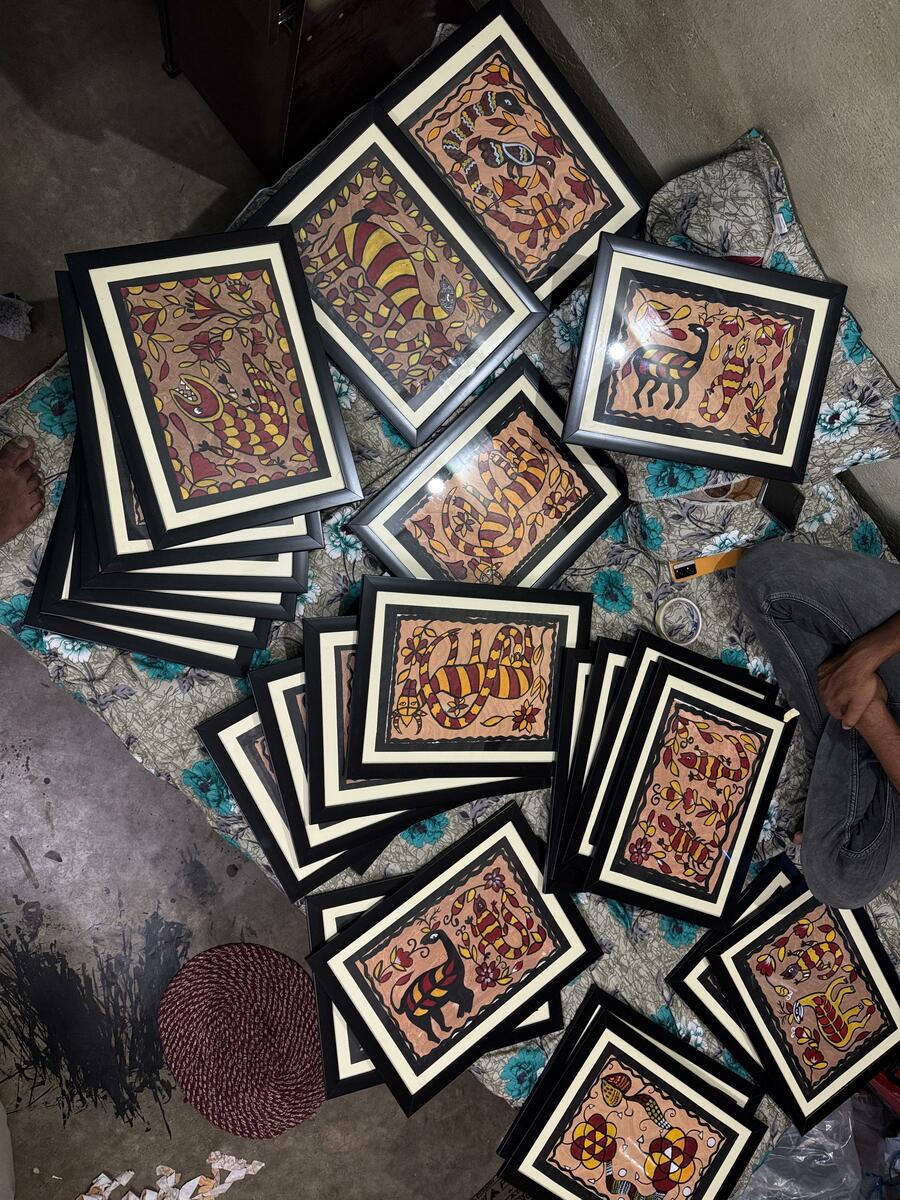
Sohrai painting is a traditional mural art form from the Hazaribagh region of Jharkhand, India, practiced by indigenous women and featuring motifs of nature, animals, and geometric patterns, often created on mud walls during the Sohrai festival. सोहराय चित्रकला भारत के झारखंड के हजारीबाग क्षेत्र की एक पारंपरिक भित्ति चित्र कला है, जो स्थानीय महिलाओं द्वारा की जाती है और इसमें प्रकृति, जानवरों और ज्यामितीय पैटर्न के रूपांकनों को अक्सर सोहराय त्योहार के दौरान मिट्टी की दीवारों पर बनाया जाता है।
Here's a more detailed look at Sohrai painting:
Origin and History:
Ancient Roots:
The art form has roots in the Paleolithic period (around 7000-400 BC), with similar motifs found in cave paintings in the region.
Sohrai Festival:
The paintings are traditionally created on the mud walls of homes during the Sohrai festival, which is celebrated a day after Diwali and marks the beginning of the winter harvest season.
Matriarchal Tradition:
Sohrai painting is a matriarchal art form, passed down from mothers to daughters, emphasizing the mother-child bond.
Geographical Indication (GI) Tag:
Sohrai paintings have received the GI tag, recognizing the region's unique cultural heritage and artistic prowess.
Themes and Motifs:
Nature and Animals:
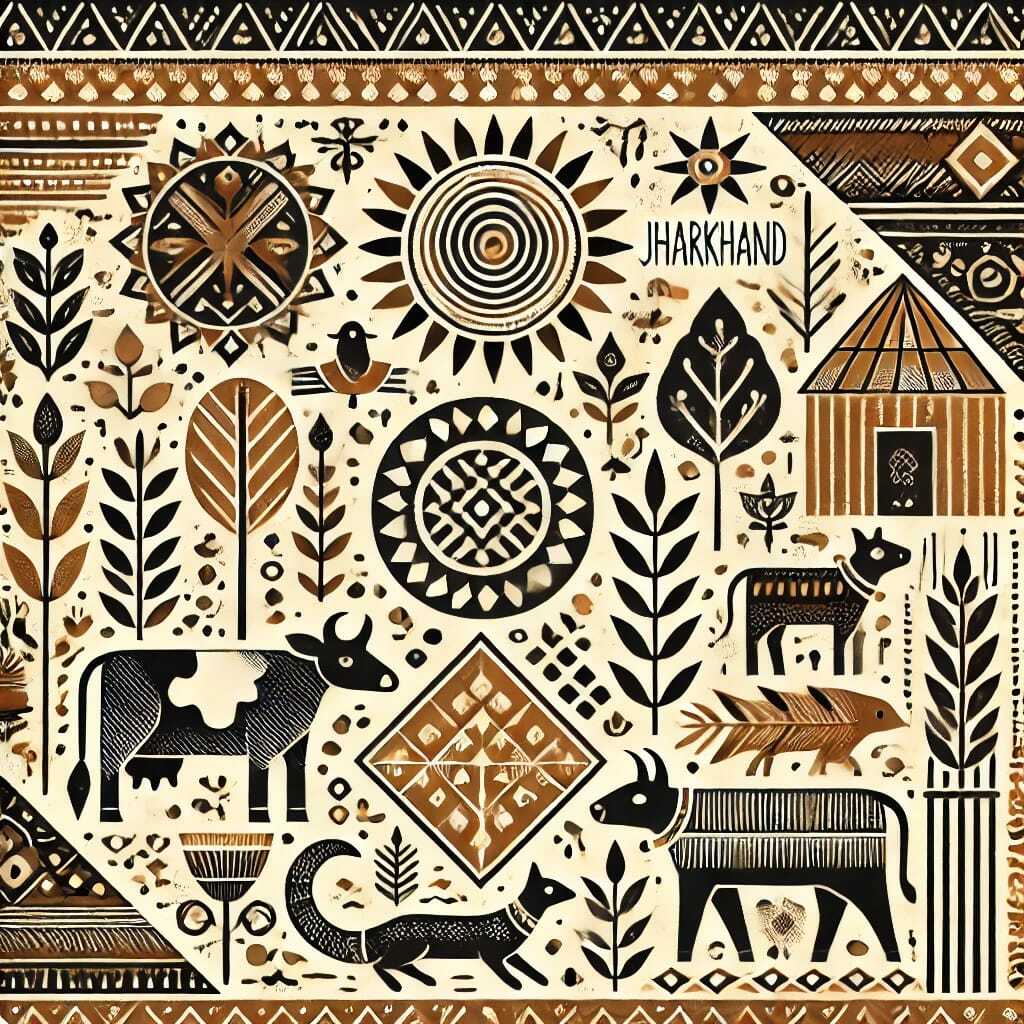
The paintings feature motifs inspired by nature, including animals, flowers, plants, and geometric figures.
Lord Shiva:
Some paintings depict Lord Shiva as Pashupati, the lord of the animals, in anthropomorphic and zoomorphic forms.
Symbolic Meanings:
The colors and motifs carry symbolic meanings, reflecting the indigenous communities' relationship with nature and their agrarian lifestyle.
Materials and Techniques:
Natural Pigments:
The paintings are traditionally created using natural earth colors derived from clay and haematites found in the region.
Simple Tools:
Artists use simple tools like twigs, rice straw, or fingers to create intricate designs.
Surface Preparation:
The walls are first coated with a mixture of soil and dung, followed by a layer of white clay.
Spontaneous Creation:
Sohrai artists are spontaneous in their drawing, with little pre-planning evident.
Communities and Region:
Hazaribagh Region:Sohrai painting is primarily practiced in the Hazaribagh region of Jharkhand, India.
Indigenous Communities:The art form is practiced by women of various indigenous communities, including Santhal, Munda, Oraon, Agaria, Kurmi, Ghatwal, Ganju, and Prajapati.
Other Regions:The art form is also found in parts of Bihar, Odisha, and West Bengal.
Khovar painting is a traditional mural art form, practiced by women in the Hazaribagh region of Jharkhand, India, primarily during wedding celebrations, where they decorate the marriage room with symbolic motifs and designs, often using natural earth colors. खोवर चित्रकला एक पारंपरिक भित्ति चित्र कला है, जिसका अभ्यास भारत के झारखंड के हजारीबाग क्षेत्र में महिलाओं द्वारा किया जाता है, मुख्य रूप से शादी समारोहों के दौरान, जहां वे प्रतीकात्मक रूपांकनों और डिजाइनों के साथ विवाह कक्ष को सजाती हैं, अक्सर प्राकृतिक मिट्टी के रंगों का उपयोग करती हैं।
Here's a more detailed look at Khovar painting:
Origin and Meaning:
The word "Khovar" comes from "kho" (chamber or cave) and "var" (married couple), signifying its association with the nuptial chamber.
Purpose:
Khovar paintings are used to decorate the marriage room and mark the arrival of the wedding season.
Technique:
The process typically starts with applying a base coat of black earth (depicting the womb) and then covering it with white clay (symbolizing sperm).
Motifs are created by scratching or scraping the white clay with a comb or fingers, revealing the black base.
The paintings are generally monochrome, using natural earth colors like black and white.
Motifs:
Common motifs include fertility and fecundity symbols, geometric patterns, and designs influenced by the local environment.
Animals, birds, lizards, and flowers are also depicted, celebrating the auspicious occasion.
The figure of a pregnant peacock is considered a particularly auspicious symbol for the marriage room.
Cultural Significance:
Khovar painting is a matriarchal tradition, with mothers passing down the art form to their daughters.
The paintings symbolize blessings for the newlywed couple and reflect the cultural and socio-religious customs of the region.
Similarities with Sohrai Painting:
Khovar painting is closely related to Sohrai painting, another traditional art form practiced by the same communities in Jharkhand. While Sohrai art is used to celebrate the harvest, Khovar art is specifically associated with wedding celebrations.
Location:
Khovar painting is primarily found in the villages of Jharkhand's Hazaribagh district.
Geographical Indication (GI) Tag:
KSG India reports that Sohrai Khovar painting was recently given a Geographical Indication (GI) tag.
A sculptor is an artist who creates three-dimensional artworks by shaping or assembling materials like stone, metal, wood, or clay. They use techniques like carving, modeling, or assembling to express ideas and emotions. मूर्तिकार एक कलाकार होता है जो पत्थर, धातु, लकड़ी या मिट्टी जैसी सामग्रियों को आकार देकर या जोड़कर त्रि-आयामी कलाकृतियाँ बनाता है। वे विचारों और भावनाओं को व्यक्त करने के लिए नक्काशी, मॉडलिंग या संयोजन जैसी तकनीकों का उपयोग करते हैं।
Here's a more detailed look at sculptors and their work:
What Sculptors Do:
Design and Create:
Sculptors conceive and create three-dimensional forms to communicate impressions and ideas.
Material Manipulation:
They work with various materials, including wood, stone, clay, metal, and more.
Techniques:
They employ techniques like carving (removing material), modeling (shaping pliable materials), and assembling (joining different elements).
Installation Art:
Some sculptors create large-scale, mixed-media displays called installations.
ANAND KUMAR. (FINE ART_specialist)
Fine art is art created primarily for its aesthetic value and intellectual stimulation, focusing on beauty, emotional impact, and artistic expression rather than functionality, encompassing disciplines like painting, sculpture, drawing, and photography. ललित कला वह कला है जो मुख्य रूप से इसके सौंदर्य मूल्य और बौद्धिक उत्तेजना के लिए बनाई जाती है, जो कार्यक्षमता के बजाय सौंदर्य, भावनात्मक प्रभाव और कलात्मक अभिव्यक्ति पर ध्यान केंद्रित करती है, जिसमें चित्रकला, मूर्तिकला, ड्राइंग और फोटोग्राफी जैसे विषय शामिल होते हैं।
Here's a more detailed look at fine art:
Key Characteristics:
Aesthetic and Intellectual Value:
Fine art is valued for its beauty, emotional resonance, and the ideas it evokes, rather than its practical use.
Artistic Expression:
It serves as a vehicle for artists to express their creativity, emotions, and perspectives.
Variety of Mediums:
Fine art encompasses a wide range of visual and performing arts, including painting, sculpture, drawing, printmaking, photography, music, dance, and theatre.
Cultural and Personal Reflection:
Fine art can reflect cultural values, challenge conventions, and provoke contemplation, offering platforms for personal expression and social critique.
"Art for art's sake":
Fine art is often described as "art for art's sake" meaning the art is created purely for its aesthetic or intellectual value, not for any practical or commercial purpose.
Examples of Fine Art Disciplines:
Visual Arts:
Painting:Using various mediums like oil, watercolor, acrylic, etc., to create images on a surface.
Sculpture:Creating three-dimensional art forms from materials like clay, stone, metal, etc.
Drawing:Creating images using lines, shading, and other techniques with pencils, charcoal, ink, etc.
Printmaking:Creating multiple copies of an artwork through techniques like lithography, etching, and screen printing.
Photography:Capturing images with a camera, often with artistic intent rather than just as a documentary tool.
Installation Art:Transforming a space into an artwork.
Performing Arts:
Music:Creating and performing music through various instruments and vocal techniques.
Dance:Expressing emotions and ideas through movement and choreography.
Theatre:Creating and performing dramatic works.
Literary Arts:
Poetry:Expressing emotions and ideas through verse
Prose:Writing in a non-poetic form to convey information or tell a story
Distinction from Applied Art:
Fine art is distinguished from applied art, which is art created for a functional or commercial purpose, such as design or decoration.
For example, a painting created to decorate a room is considered applied art, while a painting created purely for its aesthetic value is considered fine art.
aNTIQUE ARTS DECOR
An art company is a business that focuses on creating, selling, or facilitating art-related products and services, encompassing various activities like artwork sales, exhibitions, art classes, and more. एक कला कंपनी एक व्यवसाय है जो कला से संबंधित उत्पादों और सेवाओं को बनाने, बेचने या सुविधा प्रदान करने पर ध्यान केंद्रित करती है, जिसमें कलाकृति की बिक्री, प्रदर्शनियां, कला कक्षाएं आदि जैसी विभिन्न गतिविधियां शामिल होती हैं।
Here's a more detailed look at art companies:
What they do:
Artwork Sales and Exhibitions:
They can be galleries, studios, or online platforms that showcase and sell artwork from various artists.
Art Classes and Workshops:
Some art companies offer art lessons, workshops, or events to teach art techniques to the public.
Art Supplies and Equipment:
They might specialize in selling art supplies, materials, or equipment to artists.
Art Services:
This could include framing, restoration, or art consulting services.
Art Events and Festivals:
Some companies organize art events, festivals, or fairs to promote art and artists.
Art Agents/Representation:
They can act as agents or representatives for artists, helping them find opportunities and manage their careers.
Art Education:
Some companies focus on providing art education programs for children or adults.
Examples of Art Businesses:
DAG (India's leading art company):
DAG is a large art institution with commercial galleries, museum collaborations, and programming for art collectors and enthusiasts.
Wix:
Wix offers resources and tools for artists to create and manage their online art business.
Zenbusiness:
Zenbusiness provides resources and tools for artists to start and grow their art business.
Swarez Art:
Swarez Art highlights the importance of art in business and corporate culture.
ScreenSkills:
ScreenSkills provides resources and checklists for art department assistants in film and television.
rakesh kr. ranjan. (A.A.D. art assistant)
An "art assistant" is a professional who supports artists, designers, and other creative professionals by assisting with various tasks related to art production, exhibition setup, material sourcing, and project management. एक "कला सहायक" एक पेशेवर है जो कला उत्पादन, प्रदर्शनी सेटअप, सामग्री सोर्सिंग और परियोजना प्रबंधन से संबंधित विभिन्न कार्यों में सहायता करके कलाकारों, डिजाइनरों और अन्य रचनात्मक पेशेवरों का समर्थन करता है।
Here's a more detailed explanation:
Support Role:
Art assistants provide crucial support to artists, helping with the practical aspects of their work.
Diverse Responsibilities:
Their duties can range from assisting with the creation of artwork to setting up exhibitions, sourcing materials and supplies, managing budgets and schedules, and coordinating with other team members.
Entry-Level to Career:
Art assistant roles can be an excellent entry point into a career in fine arts or the broader art industry.
Specific Contexts:
Art Studios:Art studio assistants support the daily operations of an art studio, performing both administrative tasks and supporting art production.
Film and Television:In film and television, an Art Assistant is a member of the Art Department, responsible for tasks that help bring the visual elements of a story to life, working under the supervision of the Art Director and Production Designer.
Art Galleries:Art gallery assistants can assist with sales, customer service, and the overall organization of the gallery.
Art Education:Art assistants can also work in educational settings, assisting art educators in the classroom.
Skills:
Strong organizational skills, excellent time management, ability to work independently and as part of a team, proficiency in various art mediums, and experience with design software and programs are often required.
MUSKAN KUMARI. (SOHRAI ARTIST_specialist)
Sohrai art, a traditional Indian folk art form, is practiced by women artists from indigenous communities in Jharkhand, India. These artists, belonging to groups like Kurmi, Santal, Munda, and Oraon, create wall paintings and other art forms, often using natural earth colors and simple tools. The paintings depict animals, plants, and abstract symbols, reflecting the artists' worldview and connection to nature. सोहराई कला, एक पारंपरिक भारतीय लोक कला रूप है, जिसे झारखंड, भारत में स्वदेशी समुदायों की महिला कलाकारों द्वारा प्रदर्शित किया जाता है। कुर्मी, संताल, मुंडा और ओरांव जैसे समूहों से संबंधित ये कलाकार अक्सर प्राकृतिक मिट्टी के रंगों और सरल औजारों का उपयोग करके दीवार पेंटिंग और अन्य कला रूपों का निर्माण करते हैं। पेंटिंग में जानवरों, पौधों और अमूर्त प्रतीकों को दर्शाया गया है, जो कलाकारों के विश्वदृष्टिकोण और प्रकृति से जुड़ाव को दर्शाता है।
Key Aspects of Sohrai Art and Artists:
Traditional Practice:
Sohrai painting is a traditional art form passed down through generations, primarily practiced by women.
Natural Materials:
Artists use natural earth colors and simple tools like chewed sticks and cloth swabs to create their works.
Themes and Motifs:
Common themes include animals, plants, and abstract symbols, often inspired by the surrounding natural environment.
Geographical Indication:
The Sohrai-Khovar paintings received the Geographical Indication status from the Government of India in 2020, recognizing their distinctiveness and origin.